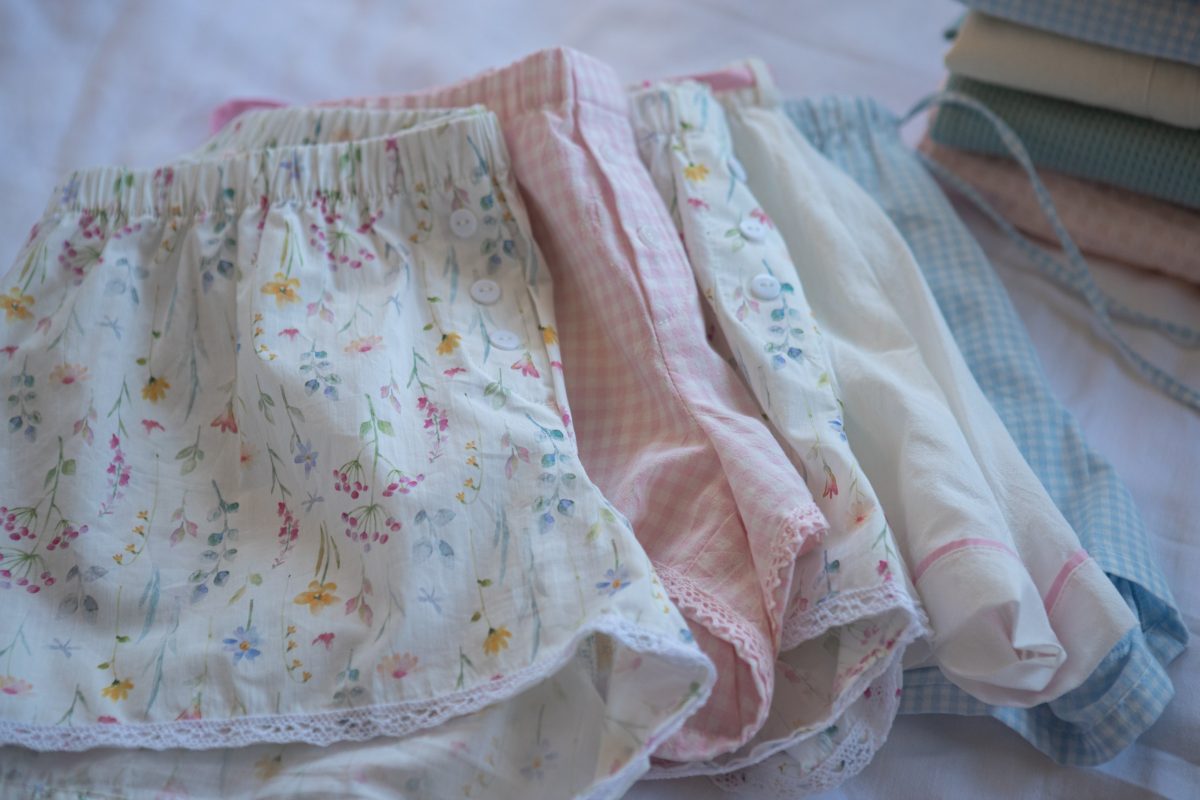
For us, every garment begins with the fabric. When we choose materials, we look at more than colour or an appealing texture. Composition, weight, how the fabric feels to the touch, and how it will behave in the finished piece — these are what matter.
The same fabric can look beautiful on the roll and disappoint in the finished garment: lose its shape after the first wash, turn out heavier than expected, or sit awkwardly on the body. So the decision isn’t made from a photo of a swatch — it’s made from what comes out at the end.
As the founder of MeLe, I select the fabrics for our collections myself, and I’m constantly looking for interesting materials from producers in different countries.
You’ll find fabrics from Italy, Turkey, Uzbekistan, Belarus and other countries in our pieces.
What matters to us isn’t the country of production but the material we end up with. A label tells you nothing about how a fabric will behave after ten washes.
We like unusual textures and interesting fibre combinations — especially when they give the fabric new properties.
Linen with cotton. Keeps linen’s beautiful characteristic texture but becomes softer and more comfortable. Pure linen is lovely, but it creases noticeably and feels stiffer; cotton in the blend softens that.
Cotton with modal. Creates a light, fluid fabric that feels wonderful against the skin. Modal is a fibre made from beech cellulose — it gives the fabric a silky hand and holds its shape well.
Cotton batiste. A fine, airy weave for summer pieces.
Waffle cotton. A textured, absorbent weave — which is why we use it for robes.
Cotton remains the foundation of many of our collections, and a large part of MeLe pieces are made from 100% cotton.
In some compositions we allow 2% to 5% elastane when a style needs a little stretch for a comfortable fit and freedom of movement. That’s a case where the addition works for comfort, not for cutting costs.
Polyester has real advantages. It’s practical, hard-wearing, creases less, and modern technology can turn it into beautiful and unusual textures.
But we decided against it for MeLe fabrics. Sometimes we have to turn down a material we love visually, simply because its composition doesn’t meet our requirements.
The reason lies in how different fibres handle moisture. Polyester barely absorbs it: its moisture regain is around 0.4%, while cotton’s is roughly 8% — a twenty-fold difference. A 2024 systematic review in the Journal of Sleep Research reported moisture buffering capacity of 0.6 kJ/m² for polyester against 6.9 kJ/m² for cotton.
In practice this means: when your body gets warm, cotton takes the moisture in, while polyester leaves it on your skin.
In Israel’s hot climate especially, breathability, lightness and comfort against the skin matter to us. That’s why we favour cotton, linen, modal and their blends.
An honest caveat. Fabric weight matters as much as fibre: a lightweight polyester can feel airier than a heavy cotton. And cotton has a quirk of its own — as the fibres take on moisture they swell and partly close the gaps that let air through, so its ventilation advantage narrows during heavy sweating. That’s precisely why we look at fabric weight, not composition alone.
Cotton, linen and modal are cellulosic fibres — they break down in nature. Polyester is a plastic, PET, and it is highly resistant to biodegradation.
In a Cornell University study, cotton and polyester jersey samples were buried in an industrial composting facility for three months. The cotton degraded; the polyester fabric remained intact.
Comfort matters to us, and so does what we leave behind.
We want the quality of a garment to be something you can feel, not only see. So we choose natural fibres, pay attention to fabric weight, and pass on materials that look good but behave poorly against the skin.
See what comes of it: sets, robes, tops.
What fabric are most MeLe pieces made from? Cotton. A large share of our styles are 100% cotton; some compositions include 2–5% elastane for a comfortable fit.
Why is there elastane in the composition if you prefer natural fabrics? Elastane at 2–5% provides stretch and freedom of movement. It doesn’t change the character of the fabric, but it makes the fit more comfortable.
How does cotton with modal differ from pure cotton? Modal makes the fabric lighter, more fluid and silkier to the touch. Pure cotton is denser with a drier hand.
Does linen with cotton crease? Less than pure linen. The cotton in the blend softens the fabric and reduces creasing, while linen’s characteristic texture is preserved.
Why doesn’t MeLe use polyester? Polyester absorbs almost no moisture — around 0.4% against roughly 8% for cotton. In a hot climate you feel that on your skin. We prefer cotton, linen, modal and their blends.
Which countries do the fabrics come from? Italy, Turkey, Uzbekistan, Belarus and others. We go by the properties of the material, not the country of production.